
What is a Receipt?
A receipt is an official document that is issued by the vendor to the buyer, that acts as proof that the vendor has received the amount owing to them for the goods or services. It is proof that the customer has paid for the goods or service. Standard basic details that are usually on the receipt include, name of the vendor, the amount received, the method of payment and some other business specific information.
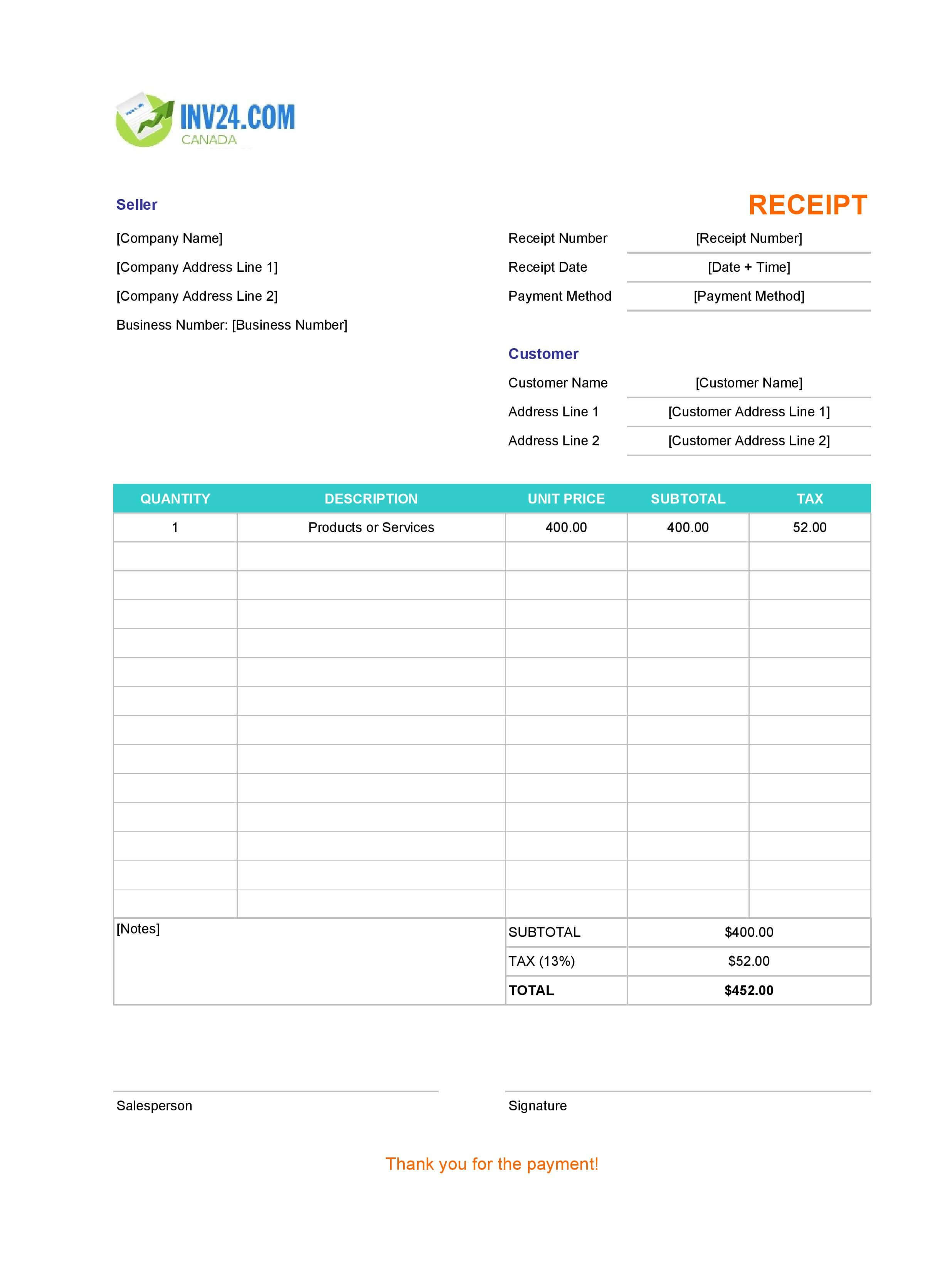
The receipt acts as an official document to prove the authenticity of the transaction. It can be used as a supporting documentation for GST/HST. It is also used for different businesses such as B2B and B2C. However, its use is more prevalent in retail B2C businesses. The reason for this, is because companies record revenue on the basis of the receipt, for a cash sale.
Purpose of Using a Receipt
There are a multitude of reasons for using receipts. Following are some of the more common ones:
- The receipt acts as official proof that a product has been purchased and is used to show ownership on the part of the customer. This may sometimes be the only document available to reflect ownership.
- In some businesses, if the customer would like to return the product that is on the receipt, which the customer has bought, then they need to show the receipt as proof of purchase.
- In the case of statutory and tax audits, a receipt can be used as a source document.
- Auditors can review receipts to verify sales transactions. However, the same assurance can be obtained by reviewing the invoices.
- The presence of receipts can act as support for the transactions in the cash register. It leads to higher reliability in the cash register and the total sales amount in the profit and loss statement.
- For bank reconciliations, the receipt books, where the receipts are stored, can come in handy. It can help to identify uncredited and unpresented checks simply by revising the recent cash movement on the bank reconciliation.
- The balance of the accounts receivables can be determined by tracking net payments received by the business during any period that is under consideration.
- Receipts are an important component of the petty cash system. This is because retail businesses usually issue receipts in place of an invoice.
How to Create a Receipt
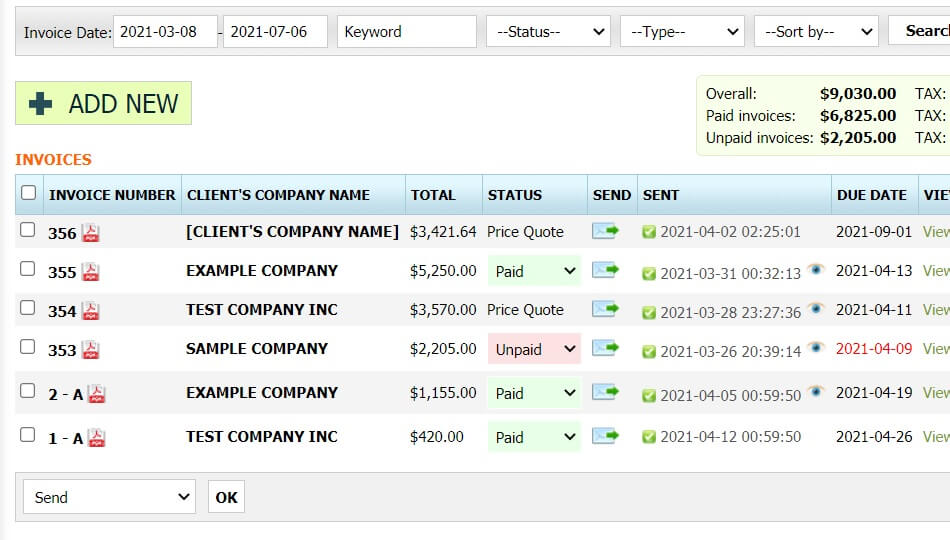
Method 1: Use our simple invoice and receipt software for Canada
Method 2: Download a free receipt template for Canada
Sample Email Template for Receipt
Hello {Name of the customer},
Please find the attached receipt # {XXX} for your recent payment.
We appreciate doing business with you and look forward to serving you again with the same zeal and professionalism. If you have any additional questions, please don’t hesitate to contact us at {Phone number / Email address}.
Best regards,
{Your name}
{Your position in the company}
{Your company name}
{Your contact details}
Difference Between an Invoice and Receipt
Following are some of the differences between invoices and receipts:
- An invoice is issued to the customer in order to request payment after a product has been delivered or services have been performed. It acts as a prompt for the customer to pay. On the other hand, receipts are issued after the payment has been received by the supplier, from the customer. Thus, receipts act as proof of payment, whereas invoices are requests for payment.
- An invoice is issued to the customer after goods are received or services have been performed whereas receipts are issued to the customer when the payment has been received by the supplier.
- Invoices often contain more detailed information such as cost break up, listing of the products delivered, description, tax details, and other related information, whereas receipts may have only basic details such as the amount paid and any amount outstanding.
Some businesses use these two documents interchangeably. However, due to some confusion that might be caused, it is not good practice to do so. If, for example, a business does not issue a receipt for the cash received, it might be difficult to trace the cash received in the situation of a customer requesting a return of any goods. This problem is avoided when invoices and receipts are used for their proper purpose.
Conclusion
A receipt, which is considered as one of the most important business documents, is issued by a vendor to a customer on receipt of payment for goods or services. Not only is it used for proving ownership of the purchase product or proof of services performed, but it is also importantly used for appropriate record keeping and management.
To enable the company to track any specific transactions and to trace payments received, the receipts should be pre-numbered and sequenced.
Notably, receipts are different from invoices. Invoices are used to send to a customer to request payment for the goods that have been delivered or the services that have already been performed. A receipt is issued after the customer has paid the amount owing and therefore, is used as proof that goods have been delivered and paid for. It is issued when the payment has actually been received and acts as proof of ownership from the customer’s perspective.
Furthermore, an invoice has more detailed information such as details for cost break up, taxes, due date for payment and other pertinent information that helps the vendor know what they are delivering or supplying. Receipts contain more basic information such as payment received and any outstanding amounts.
Frequently Asked Questions
What is the receipt number?
A receipt number is a sequence number that is printed on each receipt that is sent to the customers. It is helpful as it appropriately records business by having a record of the payments that have been made and received.
Another advantage of the receipt number is that it is used to trace the actual receipt in the event of a dispute between the supplier and customer. As a receipt number is issued once a complete invoice has been paid by a customer, it is good practice to record the invoice number in the actual receipt for record keeping and to allow the tracing of the cash position of the business.
Why is a receipt considered to be an important document from the customer’s perspective?
It is helpful for the following reasons:
- It helps to track expense, since the receipt shows the amount that the customer has paid for the goods or services.
- Due to the fact that a receipt records payment made by the customer, it is easier to make a return in the case of faulty goods, or change of mind just by presenting proof of the receipt.
- Receipts acts as supporting documentation in the case of a tax audit. It should be noted that it is an external document from a customer’s perspective as it is more reliable when required for audit purposes.
Why is a receipt considered an important document from a supplier or vendor’s perspective?
- Receipts help to keep an appropriate record.
- Receipts help to track cash received.
- Receipts are helpful when performing the bank reconciliation.
- Receipts can be used to verify revenue in the event of statutory and tax audits.
Is a receipt used during a tax audit?
Yes, a receipt is often used to verify account balances and transactions during a tax audit. If you are a customer and hold a receipt from a vendor, this external document is considered more reliable and authentic.
Do cloud-based accounting software store receipts?
Yes, receipts are like other business documents and can be attached to support the transaction.
Why is petty cash mostly supported by receipts?
Since petty cash is most likely used for small purchases and expenses, most retailers only issue receipts since issuing invoices first and then receipts would be futile. So petty cash is considered mostly supported by receipts.
CREATE RECEIPT ONLINE